

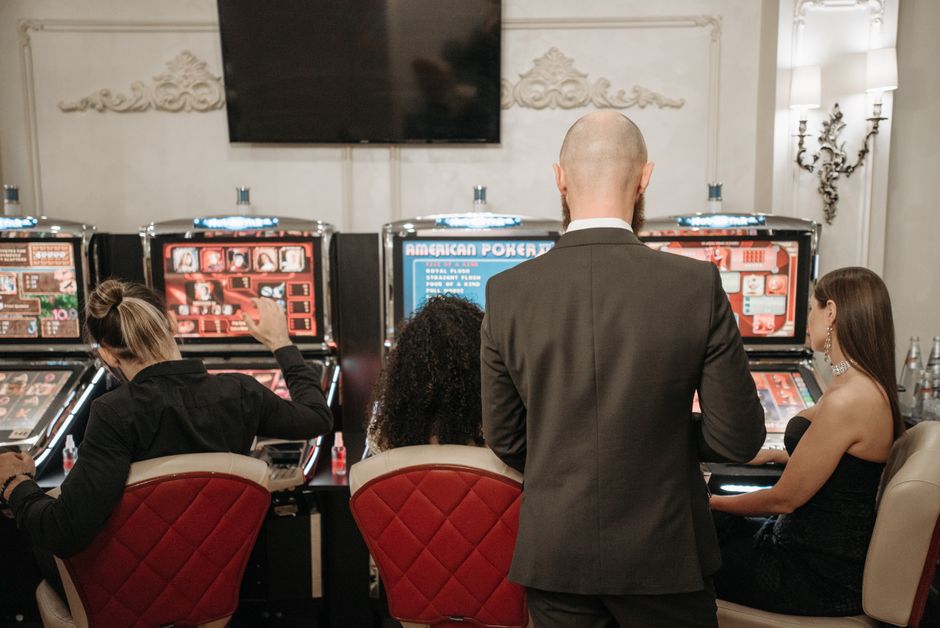
Strip away the neon graphics and the slick mobile interfaces, and every casino product ever built rests on the same quiet truth: the house always keeps a slice. That's not cynicism. It's structure. The moment you understand where that slice comes from and how big it is, the entire iGaming world stops looking like a rigged mystery and starts looking like a pricing menu. Some products are cheap. Some are brutally expensive. None are free.
So let's talk about that menu — slots, table games, poker, and sports betting — and what's actually happening under the hood.
RTP, House Edge, and Why They Aren't the Same Thing
New players often treat Return to Player (RTP) and house edge as synonyms. They're related, but they answer different questions. For practical tips, check out สล็อต.
- RTP is the percentage of all wagered money a game pays back over millions of spins. A 96% RTP slot returns 96 cents per dollar across the long run.
- House edge is the remaining 4% — the casino's theoretical cut. It's just 100 minus RTP.
The catch is the timeframe. A 96% RTP does not mean you'll lose 4% per session. It means that if every player on that game wagered a combined $100 million, roughly $96 million would come back as winnings. Your individual session might return 200%, or 0%. RTP is about the machine's behavior, not yours.
Where it gets interesting is variance. Two slots can share a 96% RTP and feel completely different. A low-volatility game like Starburst pays small amounts frequently. A high-volatility title like Book of Dead can chew through 400 spins with nothing but minor returns before a bonus round drops 500x. Same math, wildly different experience. Choosing based on feel rather than RTP alone is where a lot of players go wrong.
Slots: The Volume Business
Slots are the most popular product in iGaming for a simple reason — they're fast, and fast means volume. A single slot spin takes maybe three seconds. That's roughly 1,200 spins an hour if you're clicking steadily. At a 96% RTP, a player wagering $1 per spin theoretically loses about $48 per hour. Play $5 spins and you're looking at roughly $240 per hour in expected losses.
This is why slots are not the game to grind for a living. They are entertainment with a built-in fee. That said, some slot mechanics genuinely change the math:
- Megaways engines (Big Time Gaming-designed) offer up to 117,649 ways to win and often come with high volatility.
- Cluster pays slots reward adjacent symbol groups instead of left-to-right lines, altering probability distributions.
- Bonus buy features let you skip to free spins for a fixed price — usually between 50x and 100x your stake — which locks in a lower RTP in many cases.
One practical tip: check the in-game rules screen, not the marketing page. Regulators in the UK and Malta require published RTP, and some providers ship the same slot with multiple RTP settings (94%, 96%, and so on) depending on the operator's choice. The discrepancy isn't always disclosed prominently.
Blackjack and the Argument for Skill
If slots are the casino's bread and butter, blackjack is the player's best realistic shot at flipping the edge. A well-played basic strategy game reduces the house edge to roughly 0.5% — enormous compared to a 4% slot.
Basic strategy isn't guesswork. It's a chart of mathematically optimal decisions based on your hand and the dealer's upcard. Memorize it and you cut the house edge by roughly 2% compared to playing by gut feel.
Want to push further? Card counting can theoretically flip the edge for the player, but in practice it only works with:
- Multiple decks played with favorable penetration
- No ubiquitous shuffling machines
- Generous table rules (5:3 blackjack payouts disqualify most games)
Most online casinos use continuous shuffling machines, which render counting useless. Live dealer games aren't card-counting friendly either — the shoe is typically shuffled at fixed intervals, and you can't play enough hands to exploit positive counts. Still, blackjack played correctly is one of the few games where you can lose slower than the house edge suggests.
Poker: You Aren't Playing the House Anymore
Here's the secret poker players know that slots players don't always grasp: in a cash game, you aren't playing the casino. You're playing other people. The house just takes a rake.
The rake is typically 5% of each pot capped at $2 to $3 per hand in low-stakes games. That's your real cost. If you're a winning player at a table where nobody folds, the rake will eat you alive. If you're a losing player, the rake is the least of your problems.
Three things separate consistent winners from everyone else at the micros:
- Position. Acting last in a hand gives you information nobody else has. Profitability scales with how often you play from late position.
- Bankroll discipline. A common rule is 20 to 30 buy-ins for cash games, 50 to 100 for tournaments.
- Tracking software. Tools like Hold'em Manager or PokerTracker distinguish profitable lines from guessing, and they're permitted at most sites.
Rakeback and VIP programs also matter more than most casual players realize. In high-volume environments, a 30% rakeback deal can move a marginal breakeven player into profitability.
Sports Betting: Where the Margin Lives
Sportsbooks don't need to cheat. They just need to price both sides correctly. If the true probability is 50/50, they'll offer odds around -110 on both sides. That implies roughly a 52.4% implied probability on each side, meaning the book collects about 4.8% of every matched wager in the long run. That's the vig, or juice.
Sharp bettors try to find lines where the odds are mispriced — promotional boosts, obscure markets, or stale spreads. Public betting patterns on popular teams often move lines away from fair value, which is why contrarian betting is a real strategy, not a meme.
The Bottom Line on the Numbers
None of this is meant to ruin the fun. The whole point is that understanding where value lives lets you play longer, on your terms. Choose games with low house edges if you want to stretch the same bankroll. Choose high-volatility slots if you're chasing the entertainment value of a big hit, and accept that the math works against you hour by hour. Treat poker like a real skill sport and accept the rake as your fee for the table.
The players who last in iGaming aren't the luckiest ones. They're the ones who know exactly how much the house takes, where it takes it from, and how to choose the game where the slice is smallest. That's the entire edge — and it's the only one the industry reliably gives you.






John Doe
14 January, 2022Having no content in post should have adverse..
Chauffina Carr
10 April, 2022We use these tests all time! Killer stuff!
Jim Séchen
16 July, 2022Thanks for all the comments, everyone!